

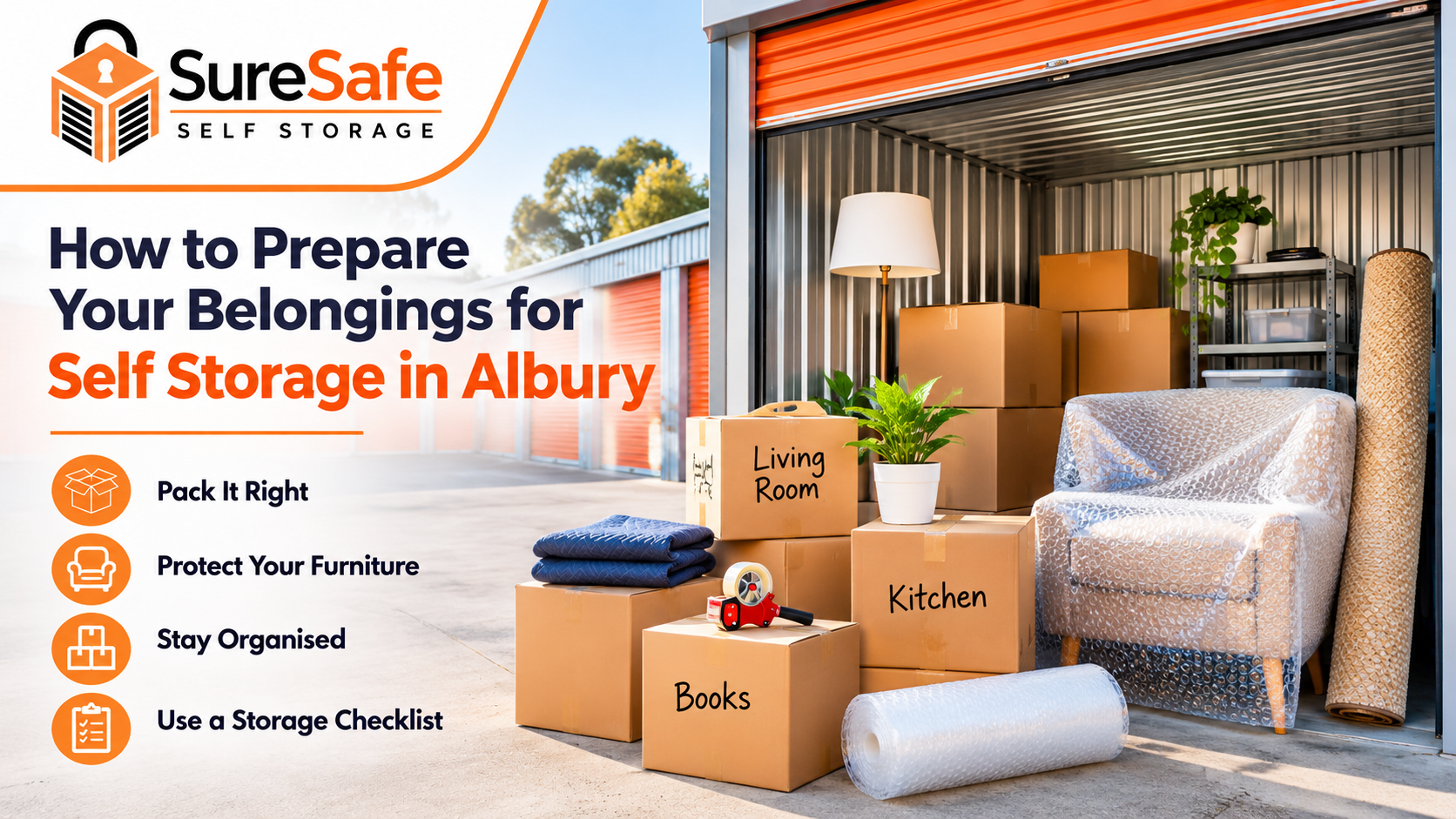
Putting your belongings into storage is not simply about finding an empty space and moving everything inside. How you prepare, pack and organise your items can make a significant difference to their condition and how easily you can retrieve them later.
Whether you are renovating your home, relocating within Albury–Wodonga, managing a business or clearing extra space in your garage, a little preparation can save time and prevent unnecessary damage.
From choosing suitable packing materials to arranging furniture and labelling cartons, here are some practical ways to prepare your belongings before renting a self-storage unit in Albury.
1. Sort Your Belongings Before Packing
Before collecting boxes or arranging transportation, take some time to decide what actually needs to go into storage.
It is easy to pack everything without considering whether you will need those items again. Sorting your belongings first can help reduce the amount of storage space required.
Create three simple groups:
- Keep at home: Items you use regularly and need within easy reach.
- Move into storage: Furniture, seasonal belongings, equipment and other items you want to retain but do not currently need.
- Donate or dispose of: Unwanted belongings that no longer serve a purpose.
This approach is particularly useful when downsizing or preparing a property for sale. You can keep your new living space organised without having to part with furniture and personal belongings that may be useful later.
2. Choose the Right Packing Materials
Using suitable packing materials helps protect your belongings during transportation and storage.
Not every item needs the same type of packaging. Fragile kitchenware, electronic equipment, clothing and furniture all require different levels of protection.
Some useful packing supplies include:
- Strong cardboard cartons
- Bubble wrap for fragile objects
- Furniture covers and protective blankets
- Packing tape and labels
- Mattress covers
- Plastic storage containers with secure lids
- Protective wrapping for glass and mirrors
Avoid using damaged cartons or boxes that cannot support the weight of their contents. Heavy items should be packed in smaller boxes so they remain manageable during lifting.
For items that may be affected by moisture, make sure everything is completely dry before packing and storing it.
3. Clean and Prepare Furniture Before Storage
Furniture requires particular attention before being placed into a storage unit.
Dust, food residue and moisture left on furniture can cause problems over time. Cleaning everything beforehand makes it easier to maintain your belongings while they are stored.
Here are a few practical steps:
Wooden furniture: Wipe surfaces clean and dry them thoroughly. Use suitable furniture protection to minimise scratches.
Sofas and chairs: Vacuum upholstery and make sure cushions are completely dry before covering them.
Mattresses: Use appropriate mattress covers to protect against dust and dirt.
Tables and wardrobes: Remove detachable components where practical and wrap delicate surfaces.
Metal furniture: Check for signs of moisture and ensure surfaces are clean and dry before storage.
At SureSafe Self Storage, customers can access clean, dry storage environments. However, proper cleaning, preparation and packaging remain important for maintaining the condition of stored belongings.
4. Organise Your Boxes for Easier Access
One of the most common mistakes people make is packing a storage unit without considering how they will retrieve their belongings.
Imagine needing a particular carton several months later, only to find it buried behind furniture and dozens of other boxes.
A simple organisation system can prevent this.
- Label every carton clearly.
- Group similar items together.
- Keep frequently needed belongings near the front.
- Place heavier cartons towards the bottom.
- Avoid stacking fragile items beneath heavy objects.
- Leave a practical pathway where the unit size permits.
You can also maintain a simple inventory on your phone or computer. Record the contents of each box so you can locate specific belongings without opening every carton.
5. Make the Most of Your Storage Unit Space
Getting the most out of your storage space requires a little planning.
Before moving everything into your unit, consider how large furniture and appliances will fit. Placing larger items strategically can leave more room for cartons and smaller belongings.
A few useful space-saving ideas include:
- Disassemble beds, tables and other furniture where possible.
- Store removable furniture components together.
- Place smaller items inside suitable drawers or cabinets.
- Use uniform-sized cartons where practical.
- Stack boxes carefully according to their weight.
- Keep fragile belongings in clearly marked areas.
Avoid overfilling your unit. Your belongings should remain accessible, and boxes should be stacked safely rather than packed tightly to the ceiling.
If you are unsure how much space you need, compare the available storage unit dimensions before booking.
6. Prepare Your Belongings According to the Season
Albury experiences seasonal weather changes, so it is worth considering when and how you prepare belongings for storage.
During warmer months, avoid leaving heat-sensitive items in unsuitable packaging or environments. During cooler and wetter periods, pay particular attention to moisture when preparing clothing, furniture and household equipment.
Some useful seasonal preparation tips include:
Summer: Store clothing, bedding and other fabrics only when completely clean and dry. Follow manufacturer recommendations for heat-sensitive items.
Winter: Check furniture and cartons for moisture before packing. Avoid placing damp outdoor equipment into storage.
Autumn: Organise garden equipment, outdoor furniture and seasonal belongings before they are no longer needed.
Spring: Sort winter clothing, decorations and household items that you want to keep for the following season.
The right preparation can help you maintain a more organised storage arrangement throughout the year.
7. Keep Important Items Separate
Not everything belongs in a self-storage unit.
Items such as passports, identification documents, essential medication, valuable jewellery and frequently used personal documents are generally better kept somewhere secure and readily accessible.
It is also important to check the facility’s prohibited-items policy before packing.
Perishable food, hazardous chemicals, flammable substances, explosives and other restricted materials should not be placed into storage.
If you are storing business records, make sure sensitive documents are packed securely and handled according to your business’s record-management requirements.
8. Consider Storage During a House Move or Renovation
Home renovations and property moves are two situations where temporary storage can be especially useful.
When renovating, furniture and household belongings may need to be moved away from work areas to protect them from dust, accidental damage and disruption.
Similarly, when moving between properties, your settlement dates may not always line up. A storage unit can provide additional space while you organise transportation and prepare your new home.
For residents in Albury, Wodonga, Lavington and Thurgoona, choosing a conveniently located storage facility can make multiple trips easier to manage.
SureSafe Self Storage offers different unit sizes and container storage options for customers who need additional space during changing living or working arrangements.
9. Why the Storage Facility You Choose Matters
Good packing practices are important, but the facility itself also plays a role in protecting your belongings.
Before selecting a provider, check the condition of the units, access arrangements and security features.
At SureSafe Self Storage in Albury, customers have access to several facility features, including:
- Individually alarmed storage units
- PIN-code controlled gate access
- CCTV surveillance
- High-security perimeter fencing
- Automatic electric gates
- Clean, dry storage environments
- Direct drive-up access
- Different storage unit and container options
These features provide additional convenience and security when storing household or business belongings.
Whether you need a small space for cartons or a larger unit for furniture and equipment, selecting an appropriate option can make the entire storage process easier.
10. Create a Storage Checklist Before Moving In
Before your belongings leave your home or workplace, take a few minutes to check that everything is ready.
Here is a simple checklist to follow:
-
Sort belongings and remove unwanted items.
-
Clean furniture and household equipment.
-
Ensure everything is completely dry.
-
Purchase suitable cartons and protective materials.
-
Wrap fragile and delicate belongings.
-
Label boxes with their contents.
-
Prepare an inventory of stored items.
-
Measure larger furniture and appliances.
-
Confirm the storage unit size.
-
Check the facility’s access arrangements and prohibited-items policy.
-
Arrange transportation and loading assistance.
Having this checklist ready can help prevent last-minute problems and make moving into storage more organised.
Make Your Storage Experience Easier with SureSafe Self Storage
Preparing belongings properly is one of the simplest ways to make self-storage more convenient. From sorting household items to protecting furniture and organising cartons, a little planning helps you use your storage space more effectively.
If you are preparing for a house move, renovating your property or simply looking to create more room, SureSafe Self Storage offers practical storage solutions in Albury–Wodonga.
With individually alarmed units, CCTV surveillance, PIN-code gate access, secure fencing and different storage options, you can choose a space that suits your requirements.
Looking for extra storage space in Albury?
Visit SureSafe Self Storage to compare available units, check pricing and request a quote.
SureSafe Self Storage
99 Bennu Circuit, Albury NSW 2640
Phone: 02 6061 0999
Website: https://suresafeselfstorage.com.au/